
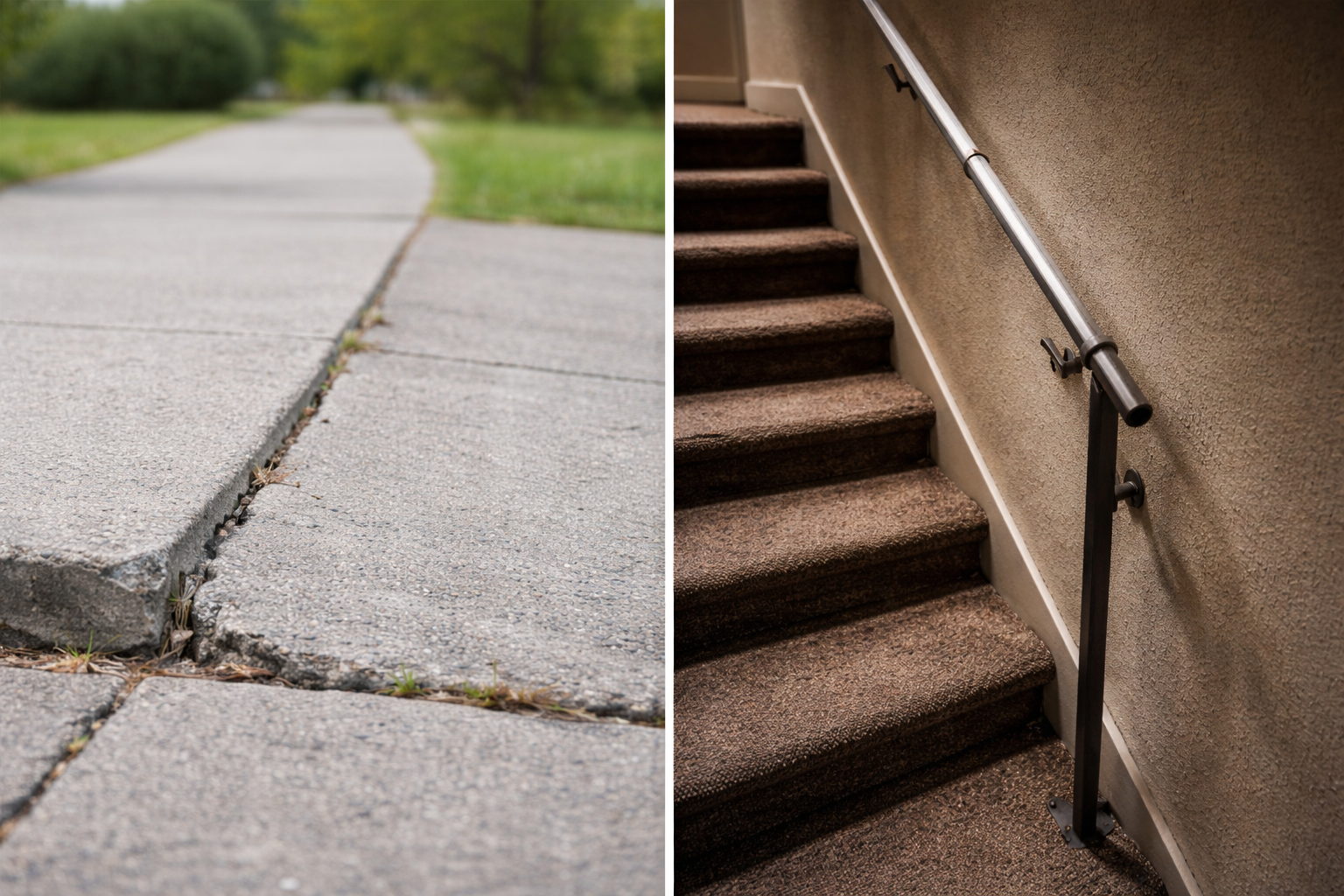
Slip and fall accidents can happen anywhere — grocery stores, restaurants, apartment complexes, parking lots, hotels, or office buildings. While some falls result in minor bruises, others cause serious injuries like broken bones, head trauma, or spinal damage.
If you were injured because a property owner failed to maintain safe conditions, you may have the right to seek compensation.
What Is a Slip and Fall Claim?
Slip and fall cases fall under an area of law called premises liability. Property owners have a legal duty to maintain reasonably safe conditions for visitors.
You may have a valid claim if:
- A hazard existed on the property
- The owner knew or should have known about it
- The hazard was not fixed or properly warned about
- You were injured as a result
Common hazards include:
- Wet or recently mopped floors
- Spilled liquids in stores
- Uneven sidewalks
- Poor lighting
- Loose handrails
- Torn carpeting
- Icy walkways
What Should You Do Immediately After a Fall?
The steps you take right after the accident can significantly impact your claim.
- Report the Incident
Notify a manager, landlord, or property owner immediately. Ask for a written incident report and request a copy.
- Take Photos
Document the hazard before it is cleaned or repaired. Take pictures of:
- The dangerous condition
- The surrounding area
- Your visible injuries
- Your footwear
- Get Witness Information
If anyone saw the fall, collect their names and contact information.
- Seek Medical Attention
Even if you feel fine, get evaluated. Head injuries and internal damage are not always immediately obvious.
Common Injuries From Slip and Falls
Slip and fall injuries can be more serious than people realize. They may include:
- Fractured wrists, ankles, or hips
- Concussions or traumatic brain injuries
- Herniated discs
- Spinal cord injuries
- Shoulder injuries
- Knee damage
Older adults are particularly vulnerable to serious complications from falls.
Can the Property Owner Be Held Responsible?
Not every fall automatically leads to liability. The key issue is negligence.
For example:
- A store may be liable if a spill sat unaddressed for hours.
- A landlord may be liable for broken stair railings.
- A business may be responsible for failing to salt icy walkways.
However, if the hazard was obvious or you were distracted, the defense may argue shared fault.
Each case depends on the specific facts.
What Compensation Can You Recover?
If negligence is proven, you may be entitled to compensation for:
- Medical expenses
- Future medical care
- Lost wages
- Reduced earning capacity
- Pain and suffering
- Rehabilitation costs
Severe falls can result in long-term disability, making full evaluation of damages critical.
Why Insurance Companies Push Back on Slip and Fall Claims
Insurance companies often argue:
- The hazard was open and obvious
- You were not paying attention
- The property owner had no notice of the danger
- Your injuries were pre-existing
Because of this, documentation and legal representation can make a significant difference in the outcome of your case.
When Should You Speak to an Attorney?
You should consider contacting a personal injury attorney if:
- You required medical treatment
- The property owner denies responsibility
- The insurance company offers a low settlement
- Your injuries are serious or ongoing
Most attorneys handle premises liability cases on a contingency fee basis.
Final Thoughts
A slip and fall accident can lead to serious physical, emotional, and financial consequences. Property owners have a responsibility to keep their premises safe. When they fail to do so, injured victims may have legal options.
If you were injured in a slip and fall accident and are unsure whether you have a case, speaking with a qualified personal injury attorney can help you understand your rights and next steps.
![[09-07-2026] San Diego County, CA – Flight Instructor and Student Killed in Cessna Crash at Montgomery-Gibbs Executive Airport](https://injured123.com/wp-content/uploads/2026/09/09-07-2026-san-diego-county-ca-flight-instructor-student-killed-cessna-crash-montgomery-gi-1024x683.png "[09-07-2026] San Diego County, CA – Flight Instructor and Student Killed in Cessna Crash at Montgomery-Gibbs Executive Airport 2")
![[09-20-2026] San Diego County, CA – 33-Year-Old Motorcyclist Seriously Injured in University Heights Crash](https://injured123.com/wp-content/uploads/2026/09/09-20-2026-san-diego-county-33-year-old-motorcyclist-seriously-injured-university-heights-1024x683.png "[09-20-2026] San Diego County, CA – 33-Year-Old Motorcyclist Seriously Injured in University Heights Crash 3")
![[09-23-2026] Sacramento County, CA – Motorcyclist Killed in Hit-and-Run on Watt Avenue Near Arden Way](https://injured123.com/wp-content/uploads/2026/09/09-23-2026-sacramento-county-motorcyclist-killed-hit-and-run-watt-avenue-arden-way-1024x683.png "[09-23-2026] Sacramento County, CA – Motorcyclist Killed in Hit-and-Run on Watt Avenue Near Arden Way 4")
![[09-23-2026] San Diego County, CA – Man Struck and Killed by SUV on Broadway in Central San Diego](https://injured123.com/wp-content/uploads/2026/09/2026-09-23-san-diego-county-man-struck-killed-suv-broadway-1024x683.png "[09-23-2026] San Diego County, CA – Man Struck and Killed by SUV on Broadway in Central San Diego 5")